


Which Polyethylene Material is Right for Your Product?
As one of the most widely used plastic families in the world, polyethylene plays a major role in the injection moulding of products ranging from consumer packaging to industrial enclosures. At Stephens Plastic Mouldings, we regularly help manufacturers choose between Low-Density Polyethylene (LDPE) and High-Density Polyethylene (HDPE) for their projects.
In this article, we’ll break down the similarities and differences between these two popular thermoplastics – and when you should choose one over the other in your injection moulding strategy.
What Are LDPE and HDPE?
Both LDPE and HDPE are made from polymerised ethylene molecules, but they differ in structure:
- LDPE (Low-Density Polyethylene): Flexible, translucent, and highly ductile.
- HDPE (High-Density Polyethylene): Rigid, opaque, and structurally strong.
Both are ideal for cost-effective, fast-cycle injection moulding and are known for their chemical resistance, moisture protection, and lightweight properties.
Key Differences Between LDPE and HDPE
| Feature | LDPE | HDPE |
|---|---|---|
| Flexibility | High – soft and bendable | Low – rigid and structured |
| Melting Point | ~105-115°C | ~130-145°C |
| Transparency | More translucent | More opaque |
| Stress Resistance | Lower – prone to cracking | Higher – durable under stress |
| Recyclability | More difficult to recycle | Easier to transport and recycle |
| Typical Uses | Bags, bottles, squeeze containers | Crates, toys, industrial containers |
If you’re unsure which material is right, our DfM (Design for Manufacture) team will advise you based on your performance requirements.
When Should You Use LDPE?
LDPE is best used when the component needs:
- High flexibility or elasticity.
- Cost-effectiveness for disposable or short-life items.
- Moderate strength with good waterproofing.
- Squeeze or collapsible functionality.
Examples:
- Flexible packaging.
- Bottle caps.
- Tubing and liners.
Explore our consumer goods moulding services for more.
When Should You Use HDPE?
HDPE is the preferred choice for:
- Applications under mechanical stress.
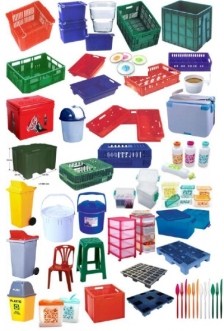
- Industrial packaging, trays, or bins.
- Outdoor or high-temperature environments.
- Rigid, structural components.
Examples:
- Agricultural containers.
- Playground equipment.
- Kitchen utensils.
- Pipe fittings.
Check our industrial and construction applications for more HDPE use cases.
Polyethylene Properties in Injection Moulding
Both LDPE and HDPE provide:
- Fast injection speeds.
- No requirement for drying pre-mould.
- Melt range from 180°C to 280°C.
- Chemical and vapour resistance.
- Lightweight, recyclable profiles.
We support both materials with tooling that maximises flow, cooling speed, and part ejection efficiency.
Trusted UK Injection Moulding Partner
Based in the West Midlands, Stephens Plastic Mouldings has over two decades of experience supporting clients with material selection, tooling manufacture, and production runs from hundreds to hundreds of thousands of parts.
We’re ISO 9001 certified, offer free trial tooling, and deliver UK-based support at every stage.
FAQs for Buyers Choosing Between LDPE and HDPE
1. Which is cheaper to mould-LDPE or HDPE?
Both are low-cost thermoplastics. LDPE may offer slightly cheaper tooling and cycle times due to its flexibility, but HDPE is more cost-effective for rigid, high-volume products.
2. Can Stephens Plastic help me choose the right polyethylene for my product?
Absolutely. We offer material consultation, prototyping, and performance testing to help you make the best decision.
3. Which plastic has better chemical resistance?
Both have excellent resistance, but HDPE has superior tolerance to alcohols, acids, and solvents – making it ideal for industrial packaging.
4. Is LDPE suitable for food-contact applications?
Yes. LDPE is used widely in food packaging. We can supply FDA- and EU-compliant grades for regulated sectors.
5. Can I switch from LDPE to HDPE with the same tooling?
In some cases, yes – but performance, shrinkage, and cycle settings vary. Our team will assess compatibility and advise accordingly.
Get Expert Help With Polyethylene Moulding
Whether you’re moulding flexible packaging or robust storage containers, Stephens Plastic Mouldings offers the tools, materials, and expertise to deliver precision-moulded parts – on time, every time.
To request a free material consultation
Contact Our Team
Email: sales@stephensplasticmouldings.co.uk
Phone: 0121 544 5808