




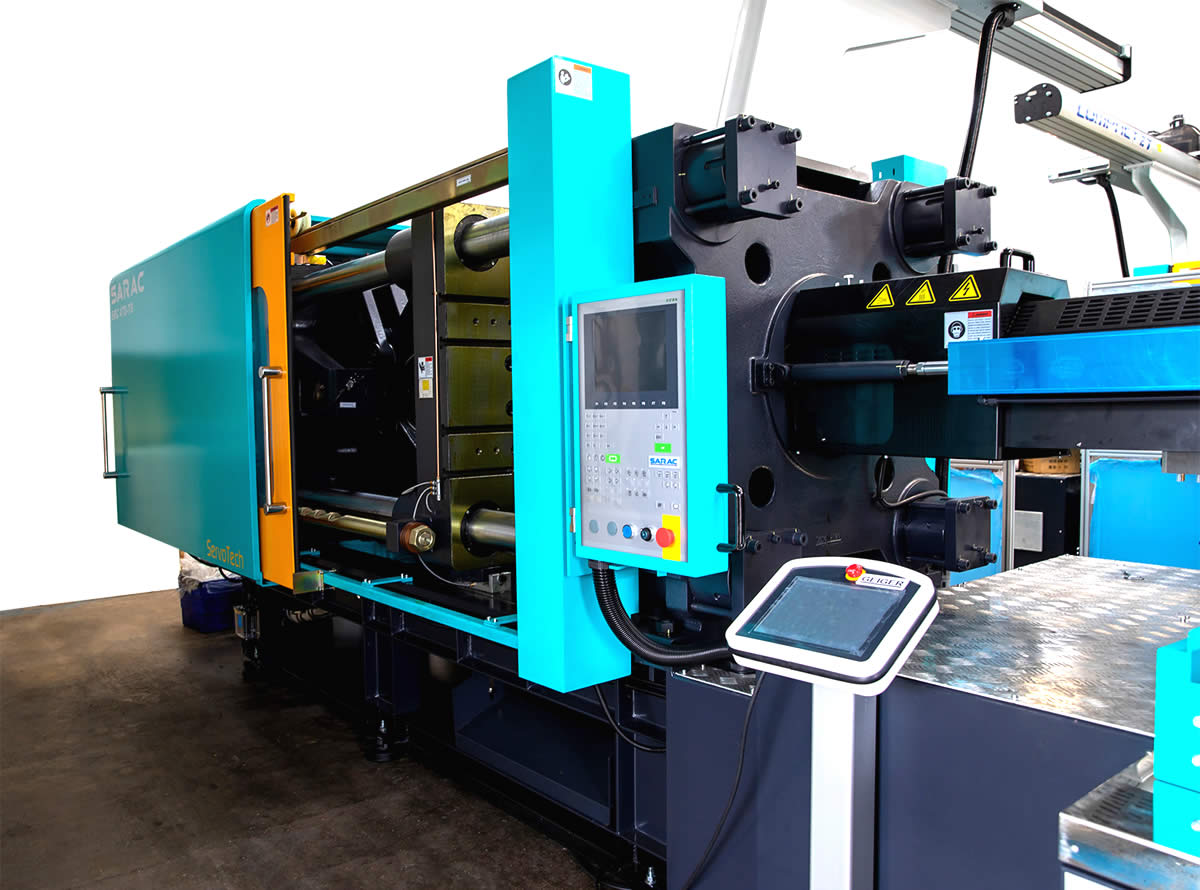
The food and beverage industry requires components that meet strict standards for hygiene, safety, durability and consistency.
Plastic injection moulding is widely used across food packaging and processing
It delivers:
- Precision-engineered components.
- Smooth, hygienic surfaces.
- Repeatable quality at scale.
- Compliance with food safety regulations.
From caps and closures to automated machinery components, injection moulding plays a critical role in maintaining efficiency across the food supply chain.
At Stephens Plastic Mouldings, we manufacture food-grade plastic components designed for safe contact, operational reliability and scalable production.
What Makes Injection Moulding Suitable for Food Applications?
1. Food Contact Compliant Materials
Food-grade injection moulding uses certified polymers such as:
- Polypropylene (PP).
- Polyethylene (PE).
- Polycarbonate (PC).
- ABS (where appropriate for non-contact components).
These materials can be supplied with full compliance to standards such as:
- FDA regulations.
- EU 10/2011 food contact requirements.
Material traceability and certification are essential for audit and regulatory compliance.
2. Hygienic Surface Finish
Injection moulding produces:
- Smooth, non-porous surfaces.
- Minimal crevices or contamination traps.
- Easy-to-clean components.
This is critical in environments where hygiene and washdown processes are mandatory.
3. Consistent High-Volume Production
Food manufacturing relies on high-speed, high-volume systems.
Injection moulding ensures:
- Repeatable part quality.
- Consistent dimensions.
- Reliable integration into automated systems.
This supports uptime, efficiency and production continuity.
4. Design for Cleanability and Performance
Components can be engineered to:
- Minimise residue build-up.
- Eliminate sharp internal corners.
- Improve fluid flow and product handling.
This reduces contamination risk and improves operational efficiency.
Applications in Food Packaging and Processing
Injection moulding supports a wide range of food industry applications.
1. Packaging Components
- Caps, lids and closures.
- Dispensing systems.
- Container components.
2. Processing Equipment Parts
- Machine guards and protective covers.
- Conveyor components and guides.
- Hopper parts and feeding systems.
3. Automation Systems
- Clips, brackets and fittings.
- Alignment and positioning components.
- Mechanical supports for packaging lines.
4. Handling and Preparation Tools
- Tray inserts.
- Portioning tools.
- Non-slip supports and pads.
These components must perform reliably under continuous use in demanding environments.
Improving Efficiency in Food Manufacturing
Injection moulding contributes to operational efficiency through:
1. Faster Production Cycles
High-speed moulding supports continuous production lines.
2. Reduced Material Waste
Precision tooling ensures minimal excess material.
3. Seamless Automation Integration
Parts are designed to fit directly into machinery systems.
4. Reliable Repeatability
Consistent components reduce downtime and maintenance issues.
Efficiency in food manufacturing is driven by consistency, and injection moulding delivers that at scale.
Design and Engineering for Food-Grade Components
At Stephens Plastic Mouldings, every food-grade project is approached with engineering precision.
1. Design for Food Safety
Components are designed to minimise contamination risk and support hygiene standards.
2. Integration with Machinery
Parts are engineered to work seamlessly with conveyors, filling systems and packaging equipment.
3. Prototyping and Validation
Trial components can be produced to test:
- Flow performance.
- Fit and alignment.
- Mechanical function.
This ensures reliability before full production begins.
Tooling and Production Capabilities
1. In-House Tooling
Precision mould tools are manufactured in-house for:
- Greater control.
- Faster turnaround.
- Improved quality consistency.
2. Flexible Production Volumes
Production can scale from:
- Low-volume prototype batches.
- Medium runs for system testing.
- High-volume manufacturing for full production.
3. Post-Mould Operations
Additional services include:
- Assembly.
- Welding.
- Printing and finishing.
This allows delivery of fully finished, ready-to-use components.
Why Compliance and Traceability Matter
Food-grade manufacturing requires full transparency.
At Stephens Plastic Mouldings, we provide:
- Material certification.
- Traceability documentation.
- Compliance support for audits.
- Consistent quality control.
This ensures components meet regulatory requirements and customer expectations.
Why Choose a UK Food-Grade Injection Moulding Partner?
Working with a UK-based manufacturer provides:
- Faster response times.
- Reduced logistics risk.
- Easier compliance verification.
- Greater production oversight.
Stephens Plastic Mouldings operates from the West Midlands, supporting food manufacturers with reliable, UK-based production and rapid turnaround.
FAQs
1. What is food grade plastic injection moulding?
It is the process of manufacturing plastic components using materials that are safe for food contact and compliant with regulatory standards.
2. What materials are used for food-grade injection moulding?
Common materials include polypropylene, polyethylene and polycarbonate, all selected for safety, durability and compliance.
3. Are injection moulded parts safe for food contact?
Yes, when certified food-grade materials are used and proper manufacturing processes are followed.
4. Can you produce components for food processing machinery?
Yes. Injection moulding is widely used for machine parts, guards, clips and automation components in food production systems.
5. Does Stephens Plastic Mouldings provide food-grade injection moulding in the UK?
Yes. We deliver compliant, traceable and scalable food-grade plastic components for packaging and processing applications.
Final Insight: Hygiene, Precision and Scalability in One Process
Food manufacturing demands a balance of:
- Hygiene and safety.
- Precision engineering.
- Reliable high-volume production.
Plastic injection moulding delivers all three within a single, efficient process.
When supported by certified materials, controlled production and engineering expertise, it becomes a critical part of modern food packaging and processing systems.
At Stephens Plastic Mouldings, we provide food-grade injection moulding solutions designed to meet the highest standards of safety, performance and scalability.
If you require a UK food grade plastic injection moulding partner for packaging, processing equipment or automation systems, our technical team is ready to assist.
Contact Stephens Plastic Mouldings Today to discuss your requirements or request a tailored quotation.
Email: sales@stephensplasticmouldings.co.uk
Call: 0121 544 5808